You look in the mirror and notice that your face is starting to show wrinkles, and the contours are less firm than before? Before considering expensive intervention solutions, more and more women are turning to Face Yoga — a natural method for rejuvenating the face that can be practiced at home in just a few minutes each day. But what is face yoga, how does it work, and is it really effective? Let’s explore this together — I am Coach Mai Linh — based on a scientific perspective.
What is Face Yoga?
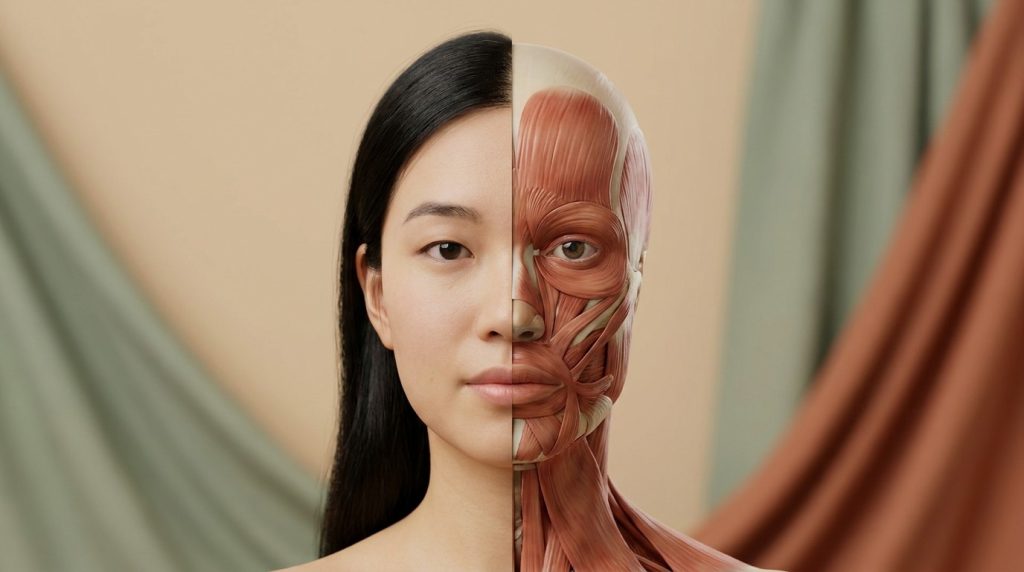
Face Yoga, or yoga for the face, is a series of exercises and massages that target the muscles of the face and neck to lift, increase firmness, and provide a naturally youthful appearance. Our face and neck contain up to 57 muscles — just like the body, when exercised regularly, these muscles will become stronger, lifted, and toned.
According to the method of expert Danielle Collins (where I received my certification), a complete Face Yoga session typically combines 4 elements:
- Facial exercises — to strengthen and lift muscle groups.
- Massage — to increase blood circulation and lymphatic drainage.
- Acupressure — to relax and activate points on the face.
- Relaxation — to relieve accumulated tension in the facial muscles.
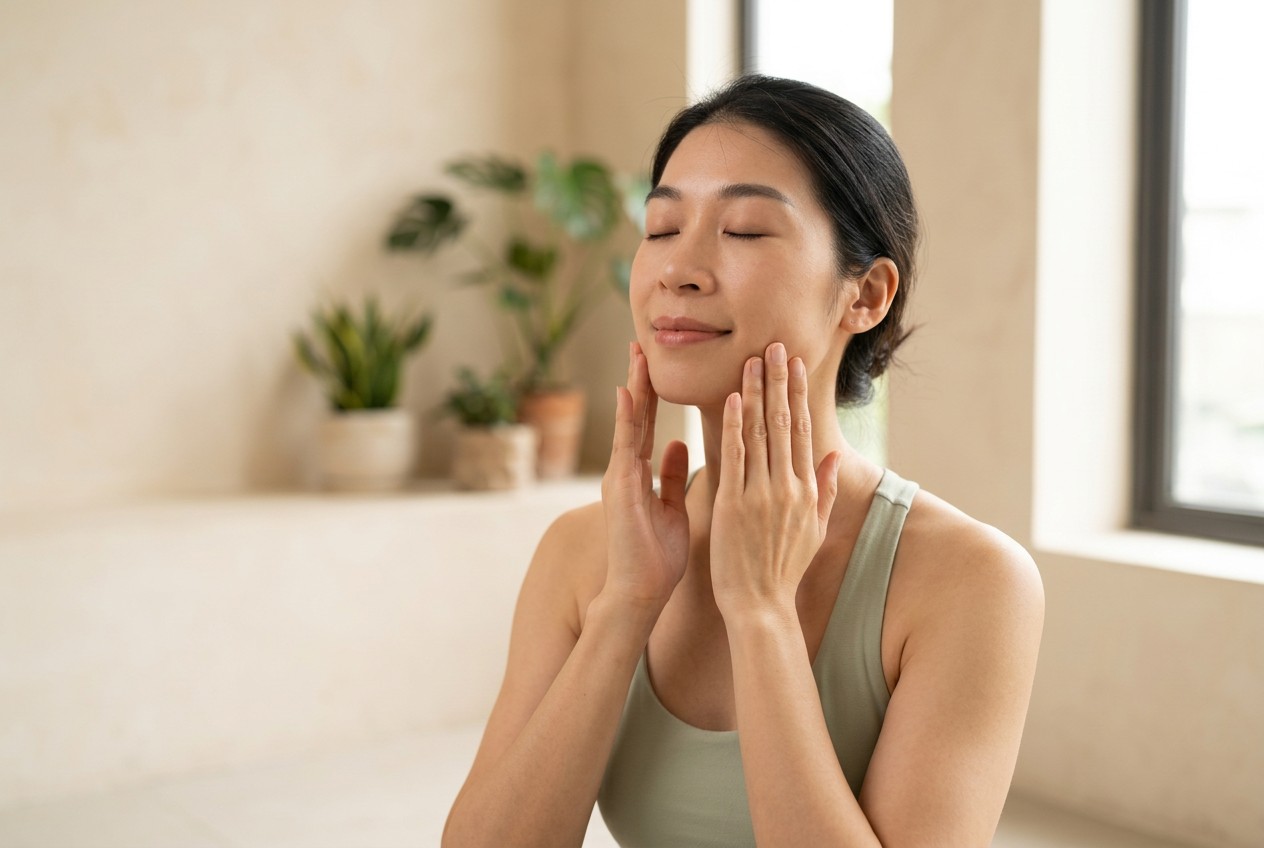
The great thing is that you only need about 5 minutes each day, no equipment, no chemicals, and you can easily practice at home.
Why does facial exercise help the skin look younger?
The rejuvenation mechanism of Face Yoga comes from two main actions:
1. Lifting muscles, toning contours
As we age, facial muscles weaken and lose volume, causing the skin to sag, leading to double chins, drooping, and deep lines. Since the skin is attached to the underlying muscle layer, when the muscles are exercised to be stronger and fuller, the skin above is also lifted and slightly tightened — resulting in a more defined and youthful appearance.
2. Massage increases circulation & drainage
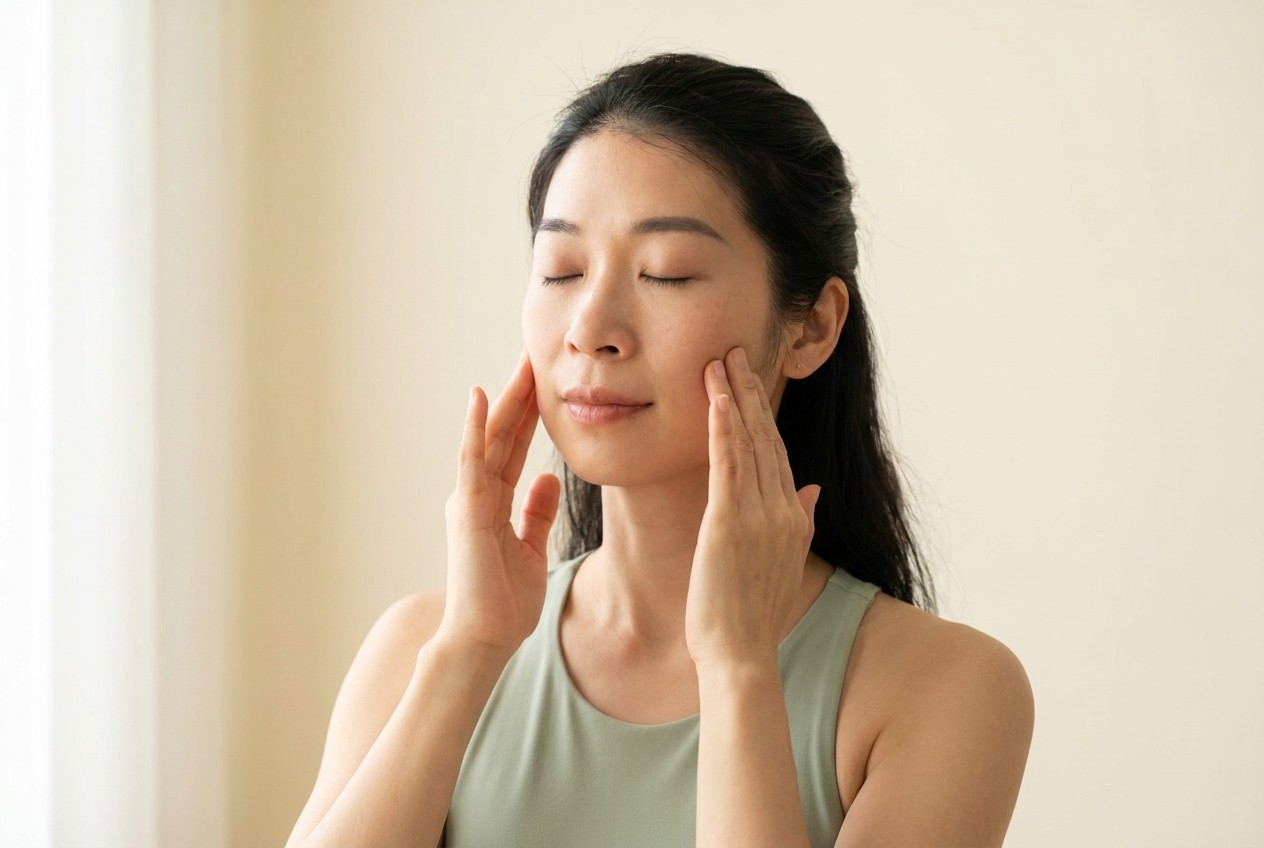
Regular massage helps increase blood flow and lymphatic drainage, aiding in detoxification, which reduces puffiness, dark circles, and helps the skin look brighter and healthier. This is why many people notice their skin looks “fresh” even before the muscles have had time to tone.
Is Face Yoga really effective? What does science say?
This is the most important question — and the good news is that there has been a well-conducted study to answer it.
In 2018, a study from Northwestern University published in the medical journal JAMA Dermatology had 16 women aged 40–65 perform facial exercises at home for 20 weeks (30 minutes each day for the first 8 weeks, then every other day). The results showed that participants had fuller upper and lower cheeks, and their perceived age (as assessed by dermatologists) decreased by an average of nearly 3 years — from 50.8 years to 48.1 years after 20 weeks.
Cleveland Clinic also noted that facial exercises can increase muscle thickness, giving a fuller appearance to the face.
To be frank: this is a small-scale study and this field is still being researched further. Face Yoga is not a miracle overnight and does not replace medical interventions. However, it is a safe, low-cost method that provides gradual improvements if you are consistent and practice correctly.
Main benefits of face yoga
- Lifts muscles, improves sagging contours over time
- Helps reduce wrinkles on the forehead, around the eyes, and smile lines
- Helps the face look slimmer and more balanced
- Reduces puffiness and dark circles through better drainage
- Relaxes facial muscles, reduces stress — good for mental well-being
- Improves complexion, making the skin look brighter and more “vibrant”
Notes for correct practice to avoid adverse effects
Some dermatologists note that repeating movements incorrectly can inadvertently create more wrinkles. Therefore, remember:
- Clean hands and skin should be cleansed before practicing.
- Use a little oil/cream to allow your hands to glide smoothly, without pulling strongly on the skin.
- Perform movements correctly and with control — quality is more important than quantity.
- Consistency every day is necessary for sustainable results.
How long should you practice to see results?
In the aforementioned study, noticeable results appeared after 20 weeks. In reality, many people feel their skin is fresher and less tense after just 1–2 weeks due to the effects of massage, while changes in firmness require more persistence. The key is to practice consistently for 5 minutes each day — just like working out for the body, facial muscles also need time.
Conclusion
Face Yoga is a natural, safe, and scientifically-based method for rejuvenating the face — suitable for anyone who wants to care for themselves gently and sustainably without intervention. The important thing is to practice correctly and consistently.
Want to get started? I have prepared a guide called “7 Days to Awaken Your Face” — a step-by-step guide for beginners, taking only 5–10 minutes each day. 👉 Get the free guide here, or learn more about the Face Yoga course for a structured journey with me.
Frequently Asked Questions
Does Face Yoga cause more wrinkles?
No, if you practice with the correct technique, do not pull the skin, and use moisturizer. Additional wrinkles only occur when movements are repeated incorrectly over a long period.
How long until results are seen?
A fresh and relaxed feeling in the skin can be noticed after 1–2 weeks; changes in firmness are usually clear after several months of consistent practice (the study noted results after 20 weeks).
How long should I practice each day?
Only about 5 minutes each day is enough to maintain, the important thing is consistency.
Can Face Yoga replace Botox or fillers?
No. Face Yoga is a natural method that improves gradually and does not replace medical procedures. It is an option for those who want gentle, sustainable care.

Author
Mai Linh - Face Yoga Vietnam
Founder & Face Yoga Coach of Face Yoga Vietnam.